
Beyond the Gateway
On gateway destinations, over-tourism, and what lesser-known travel teaches us.

The gateway travel destination is a phenomenon I’ve been mulling over again and again in my loose series here on Substack about travel reflections, tourism and overtourism, and travel motivations.
What is this phenomenon? The gateway travel destination beckons a specific kind person who perhaps hasn’t traveled much, who may absorb the world through word of mouth, social media, traditional news, ambient cultural noise. In the past, perhaps Frommer’s, or Rick Steves. Someone who may think: I want to do that. Look at those people. Look at those places. How fun! What fun! What these images and information often convey is a gateway travel destination.
I am sure you can name about 50 of these destinations right now. Florence. Paris. London. Madrid. Barcelona. Stockholm. (I reference Europe because I know it best, but the logic extends: Japan and you go to Tokyo or Kyoto, not Osaka. And so on.) Destinations whose name recognition is universal and instantly recognizable to anyone even remotely informed. Gateway destinations live in popular imagination as places that can change you — that make you someone who has been there.
I imagine travel destinations as existing in tiers. The gateway is the first tier. From there, if you keep going, you start moving outward — off the main circuits, into places that require more from you. Not necessarily more money, but more flexibility, more tolerance for uncertainty, more willingness to not know exactly what you’ll find. Language skills most likely, but not always.
Gateway destinations solve all of that. Cheap airfare, cruise stops, tour buses, English menus, guided everything. All a traveler need do is go. For someone what has never left home or the confines of their home country before, that is more than enough. I get that. I was in my twenties when I realized that I barely needed to plan travel or purchase a guidebook if such cities were my destination. I could simply show up and “do the things.” Not hard! Frictionless by design, leading to the overtourism that consistently targets the same few cities — and the same few sites. We’re not talking about a planet-wide problem. We’re talking about Florence, Barcelona, Amsterdam, Kyoto. We’re talking about Chichén Itzá, Macchu Picchu, La Boca, the Cristo, the Pão de Açúcar. Places that have been destinations for centuries, inscribed on the travel itinerary long before Instagram or cheap flights.
The Grand Tour did a lot of this legwork on travel PR. The British Empire, the French Empire, the Spanish Empire — and later American militarism and American soft power — embedded certain places in the global imagination as the places worth seeing. They entered the popular imagination and remained there, cited and visited and interpreted again and again through literature and, later, film.
Must travelers tour gateway destinations first? Not necessarily. My first time in Europe was in northwestern Spain as a teenager with a paltry budget. I was living in Santiago and my travel adventures took places in locales like Astorga, Zamora, and A Toxa. But there’s a skill-building argument in there too, to cut your travel teeth on better-trod paths. A little later on I grew my travel skills in many gateway destinations in the 1990s, still in possession of very little money: Edinburgh, Dublin, Paris, Sevilla, Barcelona. But also Culrain in Scotland, or Letterfrack in Ireland, the beaches of Foz in the Rias Altas of northern Spain. (So many places in northern Spain, a land pratically devoid of tourists if you’re not counting pilgrims!) Vieux Antibes. Assisi and Padova.
I lived in Seattle for years and refused to go up the Space Needle and never visited the Experience Music Project museum. (Not saying I don’t love a Jimi soundtrack on a hot summer day, but damn if I’ll be forced into an experience.)
By the same token I’ve been to Paris twenty or twenty-five times. To this date I’ve never gone into the Louvre — too crowded, too expensive. Ditto the Tour Eiffel. In Sevilla I’ve yet to climb the Giralda. A version of gateway travel remains valid even when you’re standing outside the attraction. Paris Schmaris! And while millions line up at the Louvre, I recognize that practical barriers exist to leaving that gateway circuit entirely.
Our family spent parts of our summer holidays from 2018 to 2023 in La Rosière, Savoie, a stone’s throw from the Val d’Isère. The ski station bustles in winter but becomes a quiet summer destination for the French, Parisians and everyone else. You can hike, bowl, admire sheep and marmots, play pétanque til you puke, have an apértif on your balcon of Beaufort d’été and rosé, sleep under a feather duvet with the windows open when the lows are single digits (Celsius), and get up in the morning to hit the boulangerie in Les Eucherts for fresh pain au chocolat. (For what it’s worth, we selected this repeat destination because it offered far greater value for our modest budget compared to Italian destinations just over the pass in Val D’Aosta.) La Rosière is impossible to reach without a car and hard to navigate without some French. Language, transportation, and the absence of tour infrastructure are real deterrents for people still building their travel confidence.
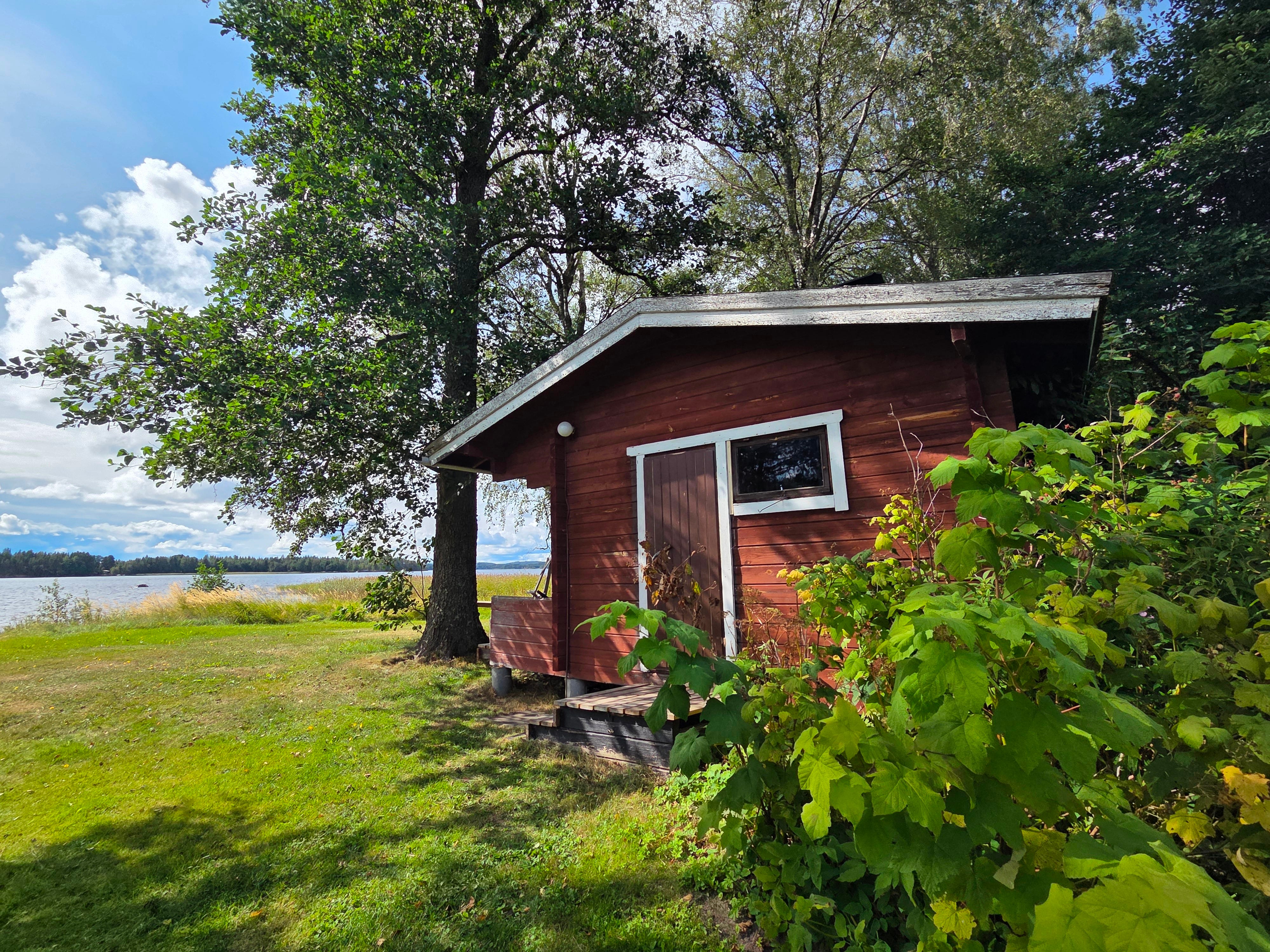
Or, last summer on a family trip to Finland, we drove to Savonlinna in the east-central vector of the country. We rented a lake house with not one, not two, but three saunas — electric, wood and smoke (sahkusauna, puusauna, and savusauna) — with the help of some Finnish friends and cousins, and self-catered nonstop dinners of lohi (salmon) and muikku, a delicate freshwater whitefish that smoked up like a dream on the grate provided. A stone’s throw from the Russian border, at dinner (more lohi) one evening with our neighbors (and pre-existing friends) we heard all about opera productions, the Finnish military, and EU mobility in the name of higher education (one of their daughters was heading to Bologna for graduate school). We wood-saunaed until we felt as grilled as the lohi and skinny-dipped in the lakefront which, to be honest, could have been colder. Is this a gateway destination? Not at all. Was it rewarding? Absolutely. Were there many tourists in Savonlinna? Ei. No. The greatest concentration I spied was around the kauppatori around lunchtime, queueing for lörtsy, a thin, half-moon shaped pastry local to Savonlinna and, it must be said, delicious.
In La Rosière and Savolinnna, we pooled our collective family travel confidence, equipped with skills gathered and developed over time to not only find those destinations, but revel in them.
Our home in Florence offers a particularly acute example of the gateway destination gone awry. Twenty million tourists a year visit a compact city that was not built to handle these volumes. And some portion of the credit — or the blame — goes to Maria Luisa de Medici and the patto di famiglia, the agreement by which she left the entire Medici collection to Florence on the condition that it never leave. She made the city a permanent destination. She also, arguably, made it permanently overwhelmed.
Which is the thing about gateway destinations: by the time you arrive, you’re one of millions arriving with the same expectation of transformation. And what you get instead is a masterclass in the full range of human behavior in a crowd, with your affection for humanity curdling, slowly or quickly, into frustration with people.
Florence shows us what happens when we demand a frictionless, pre-packaged transformation. Places like La Rosière and Savonlinna remind us of the alternative. The antidote to the curdled crowd is travel confidence, borne of the willingness to cut your teeth on the beaten path so that, eventually, you have the skills to step off it entirely. True transformation doesn't happen while waiting in line with twenty thousand other daytrippers to see the Mona Lisa, Sunflowers, or Botticelli’s Venus, or standing in front of masterpieces to snap selfies. It happens when we leave the circuit in the rearview mirror, grateful for what it taught us in the short term, but more grateful for new opportunities, new eyes, new ears. Standing on a rickety wooden dock by a Finnish lake house, watching the sauna smoke rise into the birch trees, content with wondering what I’ll find next.
What do you think of gateway destination travel? Have you undertaken it? Do you eschew it? Does it exist? Must it exist?