
The Travel Delta
On the gap between tapping your phone and actually being somewhere

Travel friction has been reduced to the point that it feels suspicious. Most people with the right apps and flush accounts could plan and execute a trip abroad from start to finish by tapping a phone.
And yet we keep going. To other places. In person. VR, reels and TikTok haven’t replaced the voyage out. They can’t deliver taste, smell, or the physical hum of sound inside the body. Immersive video is not an immersive “meatspace.”1 So people keep tapping. People keep booking. People keep chasing that elusive something else, somewhere else. Go, go, go.
The downsides are real and getting realer. Everyone is paying enormous sums to be moved around like sheeple in a herd abroad. Transhumance, indeed. (This makes me think of the Musée d’Orsay circa 1996, when I walked out genuinely annoyed that I’d just spent two hours in Paris feeling like I was on the Jersey Turnpike.) Herds trudge along the broken sidewalks of Florence with neon-green disposable earbuds, into which are cooed words in their mother tongue about where they are. The herds never look up. They don’t need to. If that’s what you’re doing there, does it really matter where there is?
Then blessed disruptions immediately remind you that your body is on a trip — Delhi belly, jetlag headaches, dehydration, heat exhaustion, bad weather, cancellations, delays, the confusion of a foreign train station or an unfamiliar airport. Once, in Mexico City’s Benito Juárez, I somehow navigated my way into the corporate offices of United Airlines on the second floor and was promptly escorted out by startled staff. Another time, trying to exit Madrid Barajas, I ended up in a janitor’s closet under an escalator with my mortified young son, who promptly began to doubt my travel skills as I muttered, where the hell is the Metro? And I speak Spanish. But oh, the stories.
These mishaps are instructive. If they didn’t happen, travel would never approach amusing. Mishaps illustrate the gap — the delta — between tapping your phone to plan a trip and actually taking your body somewhere to experience things. The phone handles the logistics. Circumstances beg to differ. The body shows up and improvises, if it can. We hope it can. That’s the point. That’s where learning occurs, the uncomfortable gap where enlightenment can creep in.
As an underfunded young traveller thirty years ago with a paper Lonely Planet, a journal, and phone numbers for local friends, I had no expectations and very little control over my present, let alone my future. A masterclass in Zen. I learned to let go of the ledger and soften my native reserve. Ready to improvise. Wanting to learn.
People keep travelling. What’s changed is that so many want to travel the same places as everyone else on the planet because travel expectations have been deeply miscalibrated by social media and its relentless consumption loop. Travellers arrive somewhere already knowing what it looks like. Travellers already think that they know the “best” café, the “hidden” piazza, the view. They watched it. They “liked” it. They saved it to Favorites.
And then they stand in front of it in person and feel — what? Do they feel what they expected? Or does it feel false and hollow, strange and sad? The performance of travel is not the same as inhabiting a trip.
In the meantime, destinations degrade. Locals move away, unable to afford tourist prices for daily life. There’s no there there anymore, and no one can say exactly when this happened. This is happening everywhere: travel has funneled leisure travel en masse.
What should we do?
Is this a moment, or the new permanent condition of going anywhere?
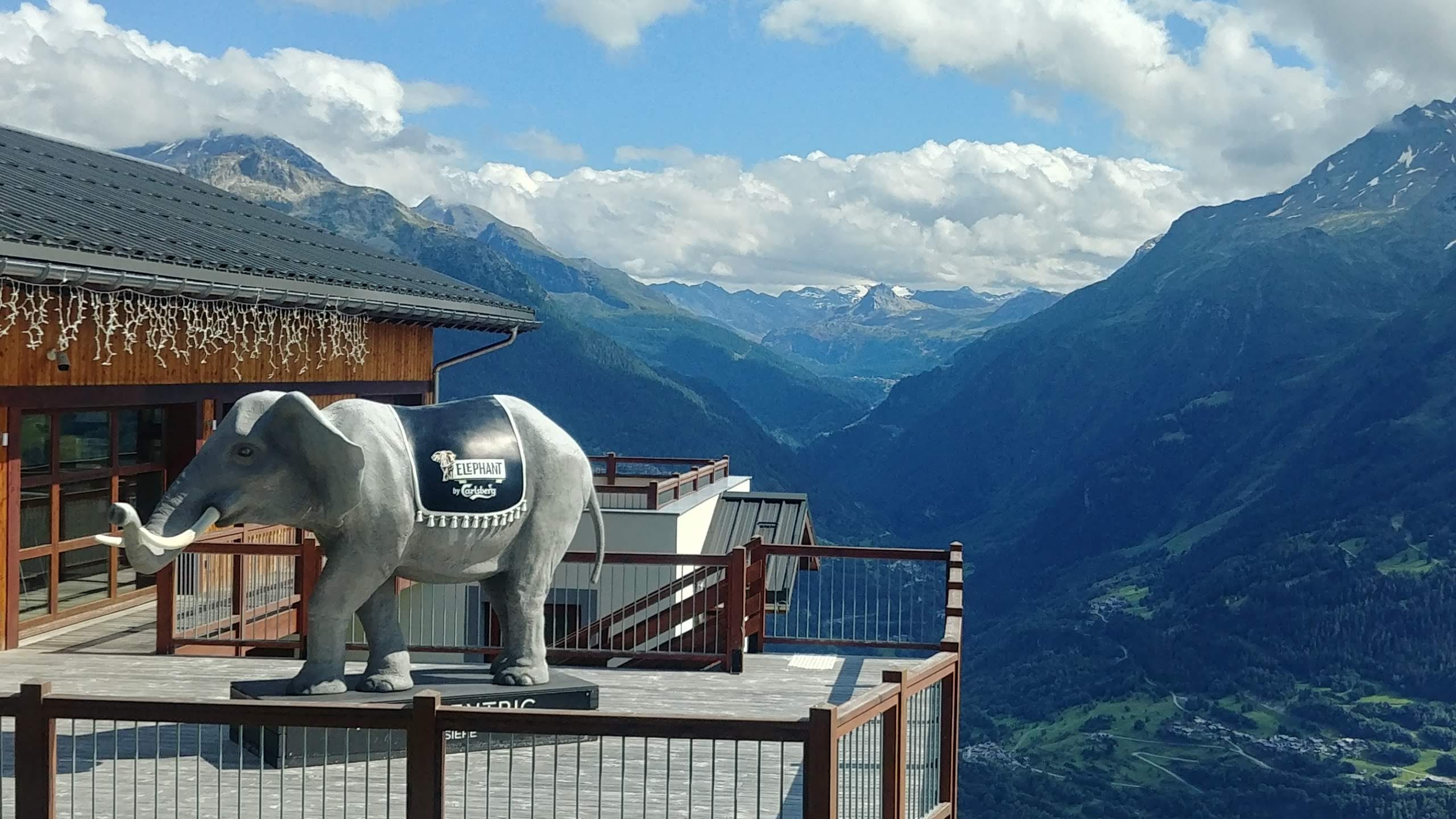
I don’t have a clean answer. But I keep pulling at the thread. And thinking of Hansken,2 an elephant on parade, on display, who died here in Florence about 375 years ago:
So extraordinary, so strange was she
that they struck her down with their exuberant curiosity.
Shipped her grey hulk all over the Continent
for everyone and all to see.
Rembrandt sketched Hansken the pachyderm
in Amsterdam.
In Piazza della Signoria, Hansken dropped to her knees
surrounded by visitors,
felled by inflammation caused by blisters
between her elephantine toes.
No one asked Hansken.
Hansken, what do you want?
What do you want from this life,
Hansken? What is it?
- Hansken (1630 Sri Lanka – 9 November 1655 Florence)
With special thanks to Jackie Link for making the comment that sparked this piece.
Faded GenX antonym for the “cyberspace” of the 1990s.
I learned about Hansken in 2020. The poem is mine, penned around then.
A clear picture, Monica. Yesterday I was in Florence center. It's crazy. Dozens of people standing at the same corner, taking the same pictures. Perhaps they saw it on TikTok.
The worst is that few of them stop to look at the city with their own eyes and not through a screen. Herds of sheepish human beings.
I have always loved to get loss in cities. To travel on my own. No groups. A map and a travel guide. No influencer, no TripAdvisor. Tourists simply "go" to cities, to the same place their friends went. Let's go to 5 terre, to Salento, to Como.... They simply visit names.
And it's not completely understandable for people living in places with no tourists. When you see them everyday, as we do, you understand it's a massive phenomenon, and very difficult to resolve.
A decade ago, celebrating our thirtieth wedding anniversary, MJ and I jetted off to Italy. I had lots of friends from the wine business, so we vowed to avoid over planning.
In the event, we learned that access to most of the places we hoped to see was vanishingly limited. No Uffizzi, among other touristic notches we would not get on our belts.
Guess what? The whole city was overrun with people willingly being shoehorned into the obvious sites. Recalling our honeymoon visit to the Louvre thirty years before, when La Gioconda appeared as a distant smudge in a sea of dapper Chinese, we sought sanctuary in one of the roughly ten thousand churches in Florence that are not the Duomo.
We were the lone intruders upon the guard-cum-guide in the gloom. This church was on no one’s itinerary.
Here’s the cool part: it was a treasure house, crowded with superb art, manifestly far from the madding, Mandarin crowd.
“That’s a Pontormo!” I exulted,
“And a pretty good one, too.”
We ended up doing the same thing in Venice, in Rome, in Siena.
If you’re at a wedding reception, avoid the scrum around the jumbo shrimp. Relax with some tasty ham salad finger sandwiches.
Once upon a time, when almost everyone was poor,
Well-to-do aristocrats went on The Grand Tour.
Now the must-see travel goals are out of sight, yielding to the
logic of touristic blight,
dreading the next influx from another flight,
And cursing those two brothers, George and Wilbur Wright.