
The Greenest Patch
On storytelling and community

My spiritual director Ray and I were talking last week about community, specifically its deeply-felt loss in the “modern” world, and noting the difference between a fragmented society and an integrated one. Our conversation moved from diagnosis to prescription: if community is lost, what can recreate it? What, if anything, can shore up an eroding community?
But before we got there, a prior question surfaced: what does real community even look like?
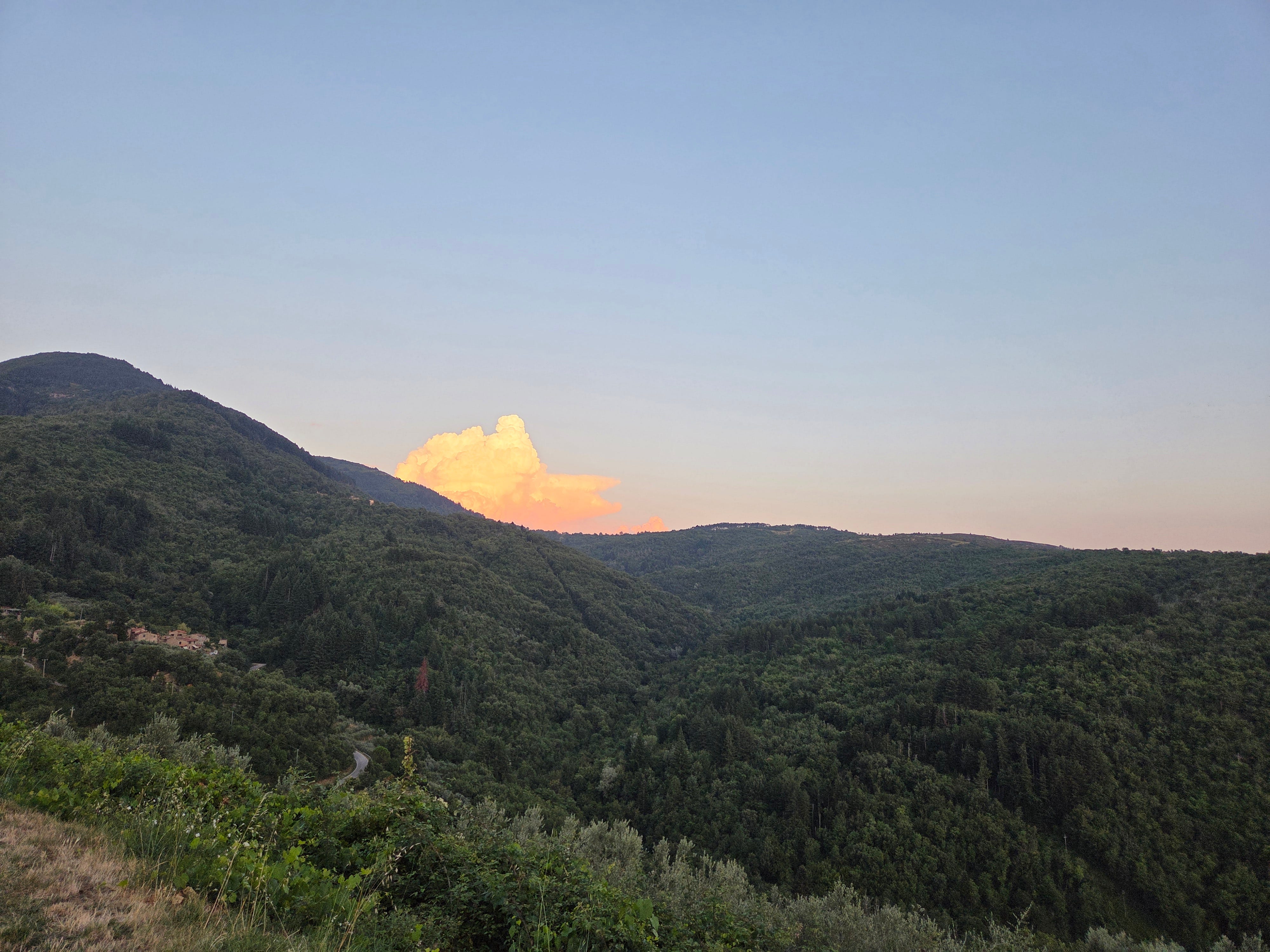
I’ve noticed it in Italy, particularly in Casale, where we maintain a very modest country home. (Stories for later!) The communities in the surrounding hillsides look across the Valdarno toward Chianti, composed of families who have known each other for centuries, possibly many centuries. These hamlets carry a living memory and a kind of rootedness impossible to imagine if you grew up in, say, Oklahoma — where nobody has been for three hundred years except the Osage, and that’s a topic for another essay.
So what happens in a place like the U.S., and increasingly elsewhere, where people are on the move and whole generations are transient, either by choice or circumstance? How do we recreate a woven community fabric when the threads keep changing? Can we?
The conversation between Ray and me led us to storytelling — both its possibility and its necessity. And also to friendliness, openness, awareness. Qualities that complicate the picture, because a traditional well-worn community fabric is very often not open or welcoming. Communal reserve was sometimes a defining feature of its coherence.
That first summer we spent at Casale three years ago, everyone came to sniff us out. Who were we? Where were we from? Why were we there? Did we speak Italian? Everyone was curious. Two of the most august nonni who live seasonally in the borgo found us in the baita, the communal bar run by volunteers that opens at Pasqua and closes at Ognissanti, serving espresso and spritz and limoncello and patatine. They had stories to tell. They wanted to tell us.
Alessandro went first, sharing a story his grandfather had given him. His great-great-grandfather, sometime in the mid-1800s, was gathering wild strawberries along one of the shepherding paths around Casale when a man from the padrone’s militia came upon him.
Butta via quelle fragole. Those berries aren’t yours, they belong to the Baron. The boy threw them on the ground where a horse promptly trampled them. The boy returned home empty-handed. And shamed. I bet he could taste those tiny red strawberries.
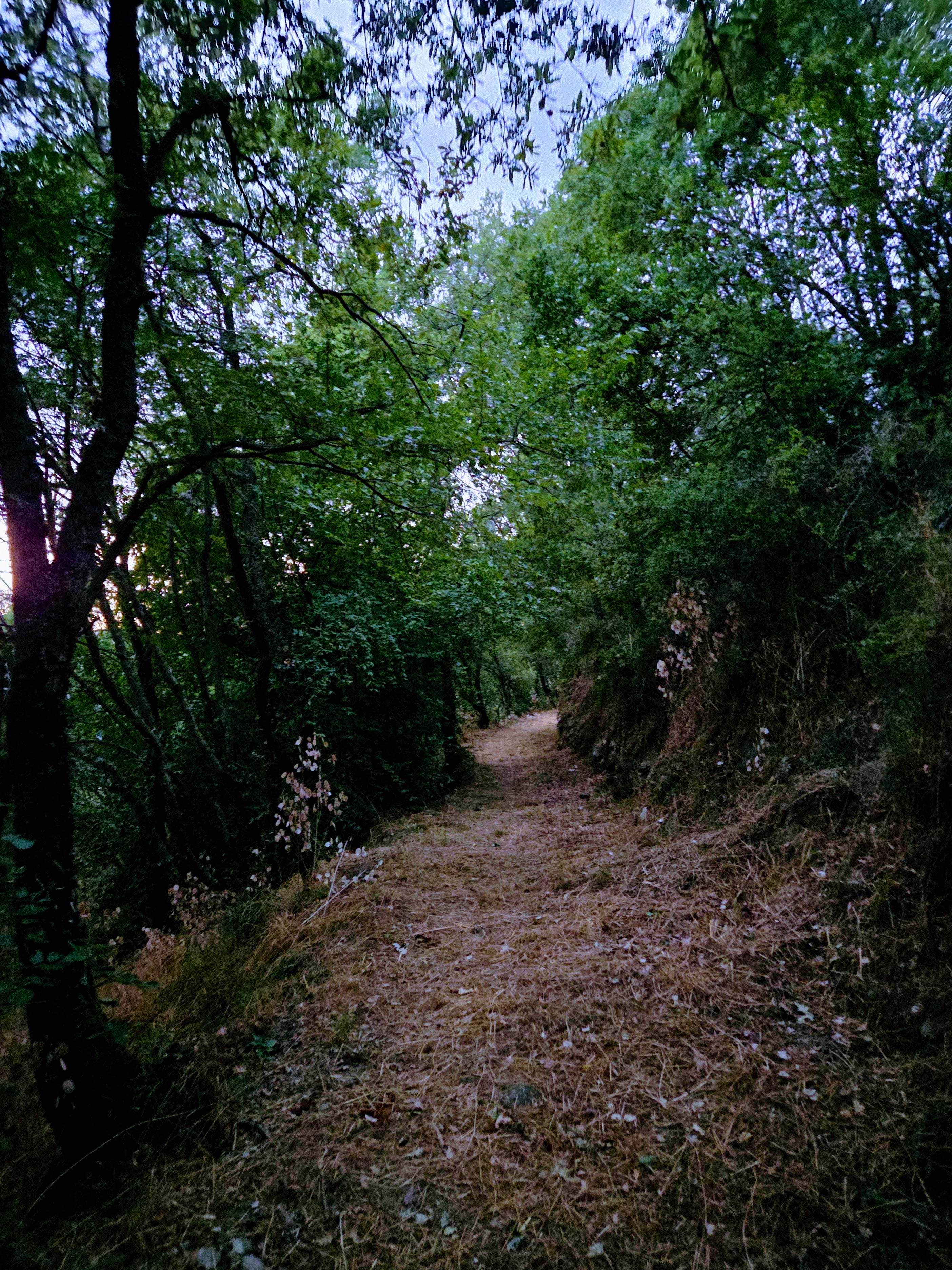
The Baron in question was no minor local landlord. He was the patriarch of the Conti Guidi, one of the great feudal dynasties of the Casentino and the Valdarno. These landlords dominated the landscape from the early Middle Ages onward and spent much of the medieval and Renaissance period in bitter, often violent conflict with powerful Florentine factions for control of the territory and everything in it: the land, the roads, the forests, the wild fragole growing along the footpaths. Their castles still stand in the hills, in various states of decay and renovation. Their name circulates in local conversation as though the intervening centuries were nothing. I Conti Guidi. A militiaman demanding that a peasant boy surrender his fragole in the 1800s was the tail end (perhaps) of an old and entrenched aspect of the local culture.
Then Giuliano pointed toward a ravine visible from where we sat. Do you see where the foliage is deepest green down there? We looked. We did not know. It all looked very green to us after years of living in the center of Florence. We chose the house for its proximity to extravagant amounts of natural green.
In the eighteenth century, Giuliano continued, a plague swept through this town. So many died that they were buried in a lime pit at the bottom of that ravine. He pointed. To this day, he said, it remains the greenest patch of the borgo.
He said this with a kind of shocking cheerfulness.
We nodded and said, yes, that is indeed the greenest patch of the borgo.
I was impressed by the scope of their living memory. And in fact, I did feel a bit more welcomed into the borgo community after hearing those two stories. Sad for strawberry boy. Horrified by the plague pit grave.
Later I understood what those two Italian nonni had been doing. They were not just telling stories. They were testing us — or inviting us. First: to see whether we were the kind of people who would listen, who wanted to become members of their community. Second: to make us keepers. So that we too would know these stories and would be able to repeat them.
I have repeated the stories since.
Maybe this is how community gets knit back together and recomposed: not through proximity or policy, but through stories that pass from mouth to ear to mouth again. It requires someone willing to tell, someone willing to listen, and a desire to carry the story forward.
What stories do you hear in your community? Are you willing to listen?
And what stories have you told newcomers — so that they, arriving without context, might begin to understand the history of the place they’ve chosen and how it works?
Thank you that is inspiring, I love stories, there can be real power in a story!
Stories of oppression and terrible diseases, but these nonni's grandchildren will tell their grandchildren about the times, where four Americans came to Casale. You'll all become the stuff of legends, Monica, the memories of you embedded in the community of the future.